
What to Buy at Olive Young After a Skin Treatment
How to shop for soothing products and sunscreen after laser or injectable skin treatments in Korea, and which popular ingredients to leave on the shelf.
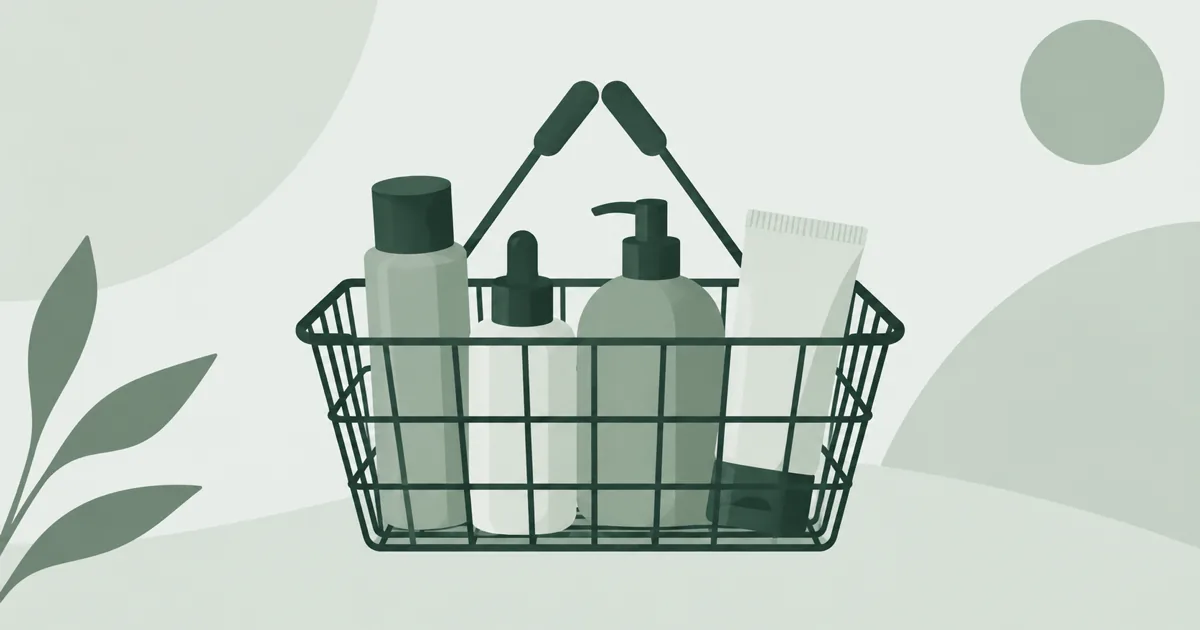
After a skin treatment you need three things and nothing else: a gentle cleanser, a bland soothing moisturizer, and sunscreen. Everything exciting on the Olive Young shelves — the acids, the retinol, the vitamin C, the exfoliating pads, the scrubs — goes back into the basket for later. The single most common mistake visitors make is treating a post-laser trip to a cosmetics store as an opportunity to try everything at once, on skin that has just been deliberately injured.
Your clinic's instructions override this article. If they gave you a specific product, use it. If they said wait seven days before anything but water, wait seven days.
First, ask the clinic
Before you shop, get these answers in writing:
- When can I wash my face, and with what?
- When can I use moisturizer? Which type?
- When can I use sunscreen, and can I use a chemical one or should it be mineral?
- When can I wear makeup?
- What must I avoid, and for how many days?
- What should I do if it stings, peels, or looks worse tomorrow?
Different treatments have genuinely different rules. Ablative and fractional lasers restrict much more than a gentle toning session does. Injectables mostly restrict pressure and massage rather than products. There is no single answer and we are not going to invent one.
The three things you actually need
1. A gentle cleanser
What to look for: low-foam or no-foam, fragrance-free, no exfoliating ingredients, no alcohol high in the ingredient list. Cream cleansers, milky cleansers, and gel cleansers labeled for sensitive skin are all fine. Look for the word "약산성" (yaksanseong, mildly acidic / low pH) — Korean brands use it prominently and it is a reasonable signal.
What to avoid: anything foaming heavily, anything with scrub particles, anything with AHA, BHA, or PHA, cleansing brushes, and hot water. Wash with lukewarm water and pat dry with a clean towel — do not rub.
On double cleansing: the Korean two-step routine is not appropriate for freshly treated skin. Skip the oil cleanser until you are wearing makeup again.
2. A soothing, barrier-repairing moisturizer
This is where Korean skincare is genuinely good and where the shelves are enormous. Narrow it by ingredient.
Ingredients that are a good bet: ceramides, panthenol (pro-vitamin B5), madecassoside and centella asiatica (marketed as "cica"), hyaluronic acid, glycerin, allantoin, and squalane. Products built around these are formulated for compromised skin and are sold in every Korean pharmacy and cosmetics store.
Format: a plain cream or lotion. Not an essence layered under a serum layered under an ampoule layered under a cream. One product, applied thinly, two or three times a day.
Sheet masks: often fine, but only plain hydrating or cica masks, and only if the clinic says yes. Avoid masks with fragrance, essential oils, alcohol, brightening actives, or "tingling" ingredients. Do not leave them on until they dry out.
Cooling gels: aloe or cica gels feel excellent on hot, tight skin. Check the ingredient list for alcohol and fragrance, which many aloe gels contain.
3. Sunscreen — the non-negotiable one
Sun exposure after a pigmentation-focused treatment can undo the treatment. Post-inflammatory hyperpigmentation is a real risk on skin that produces melanin readily, and Indonesian skin tones generally do. This matters more than any other product decision here.
What to buy: SPF 50+ with PA++++, applied properly and reapplied. Korean sunscreens are excellent, cosmetically elegant, and cheap by international standards.
Mineral versus chemical: mineral filters (zinc oxide, titanium dioxide) are often recommended for freshly treated skin because they are less likely to sting on a compromised barrier. Some leave a white cast that is more noticeable on deeper skin tones — look for tinted mineral formulations, which solve this and are widely available in Korea. If your clinic prefers a particular type, follow that.
Apply enough. The tested amount is roughly two finger-lengths of product for the face and neck, which is far more than most people use. Reapply every two to three hours outdoors.
Hats and shade do a lot of the work. Buy a wide-brimmed hat. Korean sun-protection culture is enthusiastic about this and the shops are full of good options.
What to leave on the shelf
Attractive, effective products that are wrong right now:
- Retinol and retinaldehyde. Irritating on a compromised barrier. Usually restricted for at least a week or two after resurfacing treatments; ask your clinic.
- AHA, BHA, PHA — glycolic, lactic, salicylic, mandelic acids. Exfoliating skin that is already shedding.
- Vitamin C, especially L-ascorbic acid at high concentration. Low pH, frequently stings, sometimes causes irritation on treated skin.
- Physical scrubs and exfoliating pads. Obvious once you say it out loud.
- Fragranced anything. Fragrance is the most common cause of contact irritation in cosmetics.
- Essential oils. Tea tree, lavender, citrus. Popular, and irritating on compromised skin.
- High-alcohol toners. Read the ingredient list; alcohol denat near the top is a no.
- "Tingling," "warming," or "peeling" products. The tingling is irritation.
- New products in general. This is not the moment to discover you react to something.
A practical shopping list
Walk in with this and walk out in twenty minutes:
- One low-pH, fragrance-free cleanser
- One cica or ceramide cream, unscented, in a tub or pump
- One SPF 50+ PA++++ sunscreen, mineral or tinted mineral if your skin is freshly treated
- Optional: a pack of plain hydrating sheet masks
- Optional: a soothing gel for cooling
- Optional: a wide-brimmed hat
Buy small sizes of anything you have not used before. Test on your inner forearm rather than your face if you can.
Practical notes on shopping in Korea
Olive Young is the largest health-and-beauty chain and has branches in every district including many that stay open late. Staff in the larger Gangnam and Myeongdong branches often speak some English, and the app has an English mode. Bring your passport — foreign visitors can usually claim a retail tax refund at participating stores, which is a separate scheme from the medical VAT refund and continues to operate.
Pharmacies (약국) stock dermatological brands you will not find in Olive Young, and pharmacists can advise. If your clinic recommended a specific product, this is often where it is.
Clinic shops. Many clinics sell their own aftercare products. These are usually appropriate for what you just had done, and usually more expensive. Buying the clinic's sunscreen and everything else at Olive Young is a reasonable compromise.
Read ingredient lists with your phone camera. Translation apps handle Korean ingredient lists well.
Halal note: if you avoid alcohol and animal-derived ingredients in cosmetics, note that alcohol denat is very common in Korean toners and sunscreens, and collagen, gelatin, squalane, and some emulsifiers may be animal-derived. Some Korean brands hold halal certification; status changes, so check the current certificate rather than a blog list.
Bringing it home
Liquids over 100 ml go in checked luggage — sunscreen and cleanser are the usual casualties at security. Buy enough sunscreen to last until you can find an equivalent at home; reapplication uses a bottle faster than you expect.
The single sentence version
Cleanse gently, moisturize blandly, and wear sunscreen religiously — and save the exciting products for a month from now, when your clinic says your skin is ready.
Kordy is a registered international-patient facilitator operated by DYPHI Inc. We can pass your clinic's aftercare instructions back to you in writing and ask follow-up questions on your behalf. We do not sell skincare, we do not take commission from any shop, and we do not give medical or dermatological advice — if a product stings or your skin reacts, contact the clinic, not us.